

Written by My Next Wealth Team
Published August 10, 2026
Listen to this article
Great for the car or a walk.
Money is one of the most important subjects in our lives, yet most of us receive surprisingly little formal education about it.
We learn how to solve equations.
We learn history.
We learn biology.
But very few people graduate from school understanding how compound interest works, how to build a diversified mix of assets, how much cash they should keep available, what happens financially if they become disabled, how retirement withdrawals work, or how assets eventually transfer to the next generation.
Instead, most of us learn about money through experience.
Sometimes expensive experience.
We learn about credit cards after getting one.
We learn about saving and investing after getting our first 401(k).
We think about life insurance after having children.
We start thinking seriously about retirement somewhere around the time retirement stops feeling theoretical.
And because financial education is fragmented, people often become very knowledgeable in one area while overlooking another.
Someone might understand stocks but have no emergency fund.
Someone might have substantial savings but no disability coverage.
Someone might earn $400,000 a year while accumulating surprisingly little wealth.
Someone might retire with several million dollars but have no strategy for turning those assets into sustainable income.
Someone might build a successful business but never establish what happens to that business if they die unexpectedly.
That is why I wanted to understand wealth from a broader perspective.
I did not want another list of stocks to buy.
I wanted to understand the system.
So I read 10 books that approach money from very different directions.

The Psychology of Money
Morgan Housel
Timeless lessons about wealth, behavior, risk, patience, and why doing well with money often has more to do with behavior than intelligence.
View on Amazon, The Psychology of Money, opens in a new tab
The Simple Path to Wealth
JL Collins
A straightforward introduction to investing, index funds, financial independence, and building wealth without unnecessary complexity.
View on Amazon, The Simple Path to Wealth, opens in a new tab
The Little Book of Common Sense Investing
John C. Bogle
A practical explanation of diversification, low-cost index investing, fees, compounding, and the power of staying the course.
View on Amazon, The Little Book of Common Sense Investing, opens in a new tab
A Random Walk Down Wall Street
Burton G. Malkiel
Explore market efficiency, asset allocation, bubbles, diversification, and the challenge of consistently beating the market.
View on Amazon, A Random Walk Down Wall Street, opens in a new tab
The Millionaire Next Door
Thomas J. Stanley & William D. Danko
A fascinating look at how many wealthy households actually build and preserve wealth through discipline, saving, and intentional spending.
View on Amazon, The Millionaire Next Door, opens in a new tab
The Richest Man in Babylon
George S. Clason
Classic lessons about saving, paying yourself first, controlling expenses, protecting capital, and putting money to work.
View on Amazon, The Richest Man in Babylon, opens in a new tab
The Wealthy Barber
David Chilton
An approachable introduction to saving, retirement, insurance, taxes, and creating sustainable financial habits.
View on Amazon, The Wealthy Barber, opens in a new tab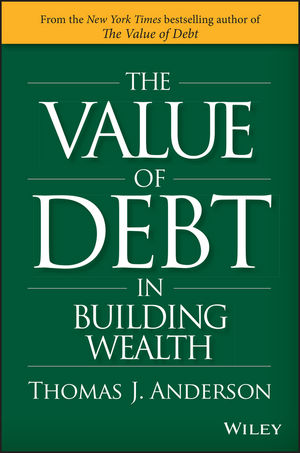
The Value of Debt in Building Wealth
Thomas J. Anderson
A different perspective on liquidity, leverage, debt management, and thinking about your finances as a balance sheet.
View on Amazon, The Value of Debt in Building Wealth, opens in a new tab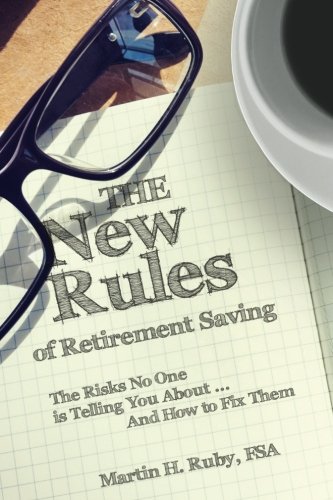
The New Rules of Retirement Saving
Martin H. Ruby
Explore retirement income, longevity, taxation, risk management, and the challenges of moving from accumulation to distribution.
View on Amazon, The New Rules of Retirement Saving, opens in a new tab
Tools & Techniques of Life Insurance Planning
Stephan R. Leimberg et al.
A more advanced exploration of life insurance, taxation, ownership structures, estate liquidity, business applications, and legacy planning.
View on Amazon, Tools & Techniques of Life Insurance Planning, opens in a new tabSome focus on markets and compounding.
Some focus on behavior.
Others explore retirement, insurance, debt, taxes, estate planning, and financial independence.
I do not agree with every conclusion in every book, nor should anyone.
Financial education is not about finding one author and treating their philosophy as universal truth.
It is about understanding principles, recognizing tradeoffs, and developing a framework for making better decisions.
After putting these books together, I came away with 30 lessons.
Not 30 stock tips.
Thirty lessons about how money actually fits together.
Part I, Understanding Money
Lesson 1: Wealth Is Usually What You Do Not See
One of the most important distinctions in personal finance is the difference between income, consumption, and wealth.
They are not the same thing.
Imagine two households.
Household A earns $400,000 per year. They own an expensive home, lease two luxury vehicles, travel frequently, dine at expensive restaurants, and spend most of what they earn.
Household B earns $180,000. They live comfortably but below their means, consistently save and invest 20% of their income, maintain cash reserves, avoid excessive consumer debt, and have accumulated substantial assets.
Which household is wealthier?
You cannot answer the question from income alone. And you certainly cannot answer it by looking at their cars.
That is because wealth is accumulated capital, not visible consumption.
When someone buys a $100,000 vehicle, you know one thing with certainty: they spent, or financed, approximately $100,000.
You do not know their net worth. You do not know their debt. You do not know their retirement savings.
This distinction matters because modern culture constantly exposes us to consumption while hiding balance sheets.
We see vacations, homes, restaurants, watches, and cars.
We do not see account statements, mortgage balances, tax bills, business debt, emergency reserves, or retirement accounts.
As a result, it is easy to accidentally compete in the wrong game.
Looking wealthy is a consumption game. Becoming wealthy is an accumulation game.
Every dollar has two potential lives. It can purchase something today, or it can become capital capable of producing more dollars tomorrow.
Financial maturity means intentionally deciding between the two.
Lesson 2: Financial Success Is More Behavioral Than Mathematical
Most basic wealth-building mathematics is surprisingly simple.
If you consistently spend less than you earn, put the difference to work, diversify appropriately, control unnecessary costs, avoid catastrophic losses, and allow enough time for compounding, you are doing many of the important things correctly.
The formulas are not usually the hard part. Human behavior is.
Consider what happens during a major market decline.
A saver understands intellectually that markets fluctuate. Then $500,000 becomes $375,000.
Suddenly, theory becomes emotional.
"What if it keeps falling?"
"What if this time is different?"
The same problem happens in the opposite direction. Something rises rapidly, everyone seems to be making money, and fear becomes greed.
The practical lesson is important. Build financial systems when you are calm.
Automate contributions. Determine your risk tolerance before markets fall. Create rules around speculative bets. Maintain sufficient liquidity so emergencies do not force you to sell long-term holdings.
The less your financial future depends on making perfect emotional decisions during stressful moments, the stronger the system becomes.
Lesson 3: Pay Yourself First
Most households naturally organize money in this order: income, then bills, then spending, then lifestyle, then saving.
Whatever remains gets saved. Unfortunately, lifestyles are remarkably good at consuming whatever income is available.
Paying yourself first reverses the process: income, then saving, then obligations, then lifestyle.
Suppose someone earns $6,000 per month after taxes. Instead of waiting until the 30th to determine whether they can save $500, they automatically transfer $500 on payday.
The psychological difference is significant. The person is not trying to save $500. They are living on $5,500.
Automation turns a good intention into infrastructure. And financial infrastructure is usually more reliable than motivation.
Lesson 4: Lifestyle Inflation Can Consume Almost Any Income
Imagine receiving a $20,000 raise. Initially it feels enormous.
Then you upgrade the apartment. You finance a nicer vehicle. You add several subscriptions. You eat out more. You take more expensive vacations.
Within a year, the additional income has disappeared into the lifestyle.
This is often called lifestyle creep, and it explains why some people earning several hundred thousand dollars per year still feel financially stressed.
The solution is not living miserably. It is creating intentional rules for raises.
For example: whenever my income increases, 50% of the increase improves my lifestyle and 50% increases my saving.
Now success produces both a better present and a stronger future.
Lesson 5: Define "Enough"
Imagine playing basketball without a hoop. You could dribble forever, but you would never score.
Money can become the same game. $100,000 is not enough. Then $1 million is not enough. Then someone you know has $5 million.
There is nothing wrong with ambition. But financial freedom requires some understanding of what you are trying to become free for.
What lifestyle would make me genuinely happy? How much does that lifestyle cost? How much security do I want? What do I want to provide for my family? What kind of legacy matters to me?
Once you understand the destination, money becomes a tool rather than a scoreboard.
Part II, Growth and Compounding
Lesson 6: Compounding Is More Powerful Than It Looks
Compound growth means earning returns not only on your original capital but eventually on previous returns as well.
Suppose $100,000 earns an average 7% annually. After one year, approximately $107,000. After 10 years, approximately $196,700. After 20 years, approximately $386,900. After 30 years, approximately $761,200.
No additional contributions.
The final decade creates significantly more growth than the first because the capital base has become much larger.
Real markets do not return 7% neatly every year, and actual results depend on volatility, taxes, fees, timing, and the choices you make. But the mathematical principle remains.
One of the most valuable things a saver can possess is not information. It is patience.
Lesson 7: Starting Earlier Can Be More Important Than Starting Perfectly
Suppose two people eventually want to accumulate wealth.
Person A spends years researching the perfect strategy. Person B starts earlier with a reasonable diversified approach and continues learning.
Even if Person A later becomes more sophisticated, Person B has something that cannot be purchased: time already spent compounding.
People delay because they are waiting for a better market, higher income, lower interest rates, the next recession, the next election, or the perfect plan.
There will always be a reason to wait.
A more useful approach is to start appropriately, start within your means, learn, adjust, and increase contributions as your financial capacity grows.
Lesson 8: Diversification Protects You From Needing to Predict the Future
Imagine putting your entire retirement account into one company.
If that company becomes the next dominant global business, you could become extraordinarily wealthy. If it fails, your retirement could disappear.
Concentration increases the range of possible outcomes. Diversification narrows it.
Diversification will not prevent losses. A broadly diversified mix can still decline significantly.
What diversification attempts to reduce is the risk that one specific failure permanently destroys the plan.
It is an acknowledgment of uncertainty. We do not know the future, so we build strategies that do not require us to.
Lesson 9: Fees Have a Long-Term Cost
Imagine two options with identical gross performance. One costs 0.10% annually. Another costs 1.50%.
The difference may not feel dramatic in year one. But costs reduce the amount of capital remaining available to compound. Over decades, that difference can become substantial.
That does not mean never pay fees. Professional planning, tax advice, legal work, insurance, and specialized strategies can provide meaningful value.
The question should be: what am I paying, and what am I receiving?
Small percentages applied to large amounts of money for long periods deserve attention.
Lesson 10: Consistently Beating Markets Is Harder Than It Looks
Every year there will be funds, managers, stocks, and strategies that dramatically outperform.
The problem is identifying them beforehand.
Past performance is visible. Future performance is not.
It is easy to look at the previous five years and say, "I should have owned that." That is different from determining today what will outperform over the next five.
This is part of the argument behind low-cost index approaches. It is not the only legitimate philosophy, but understanding the difficulty of persistent outperformance can prevent excessive trading, performance chasing, and misplaced confidence.
Lesson 11: Volatility and Permanent Loss Are Different Risks
Suppose a diversified mix of assets declines 25%. That is painful.
But the decline itself does not necessarily mean 25% of your wealth has been permanently destroyed.
Prices fluctuate. Permanent loss occurs when capital cannot reasonably recover, perhaps because a holding fails, you sell during a decline and never return, or you were forced to liquidate because you needed the money.
This leads to an important planning principle. Do not treat short-term money as though it were long-term money.
Money needed for next year should generally be handled differently from money intended for retirement 30 years from now.
Lesson 12: Your Strategy Has to Work Psychologically
Two people can have identical incomes and ages but need very different approaches, because humans experience risk differently.
One person watches a 30% decline and thinks, "Markets are volatile, I will continue contributing." Another cannot sleep.
If the second person eventually panic-sells, the aggressive approach may have been inappropriate even if its expected long-term return was higher.
Risk tolerance is not just a questionnaire. It involves financial capacity for loss, emotional tolerance for volatility, time horizon, liquidity, income stability, and objectives.
A strategy should be built around the actual person who owns it.
Lesson 13: Risk Is the Price of Expected Return
Everyone would like high returns, no volatility, complete liquidity, no possibility of loss, guaranteed income, low fees, and no restrictions.
Unfortunately, financial products involve tradeoffs.
Higher potential returns generally require accepting some type of risk or uncertainty. Greater guarantees may require accepting lower upside, restrictions, costs, or reduced liquidity.
This leads to one of the most useful questions in finance: what am I giving up in exchange for what I am receiving?
There is rarely a universally perfect financial product. There are tools designed for different objectives.
Part III, Financial Independence
Lesson 14: Financial Freedom Depends on Both Assets and Lifestyle
Financial freedom is not purely about becoming a millionaire.
Suppose someone has $2 million but requires $300,000 annually to support their lifestyle. Another person has $1.5 million, modest fixed expenses, additional income sources, and needs $70,000 annually.
The second person may have considerably more financial flexibility.
Every recurring expense increases the amount of income your financial system must continuously produce.
Financial independence therefore has two levers: increase resources, and reduce the amount required to support the life you actually want.
Lesson 15: Savings Rate Matters Enormously
Your savings rate is the percentage of income you are able to retain rather than consume.
If you earn $100,000 and set aside $5,000, your savings rate is roughly 5%. If you set aside $20,000, it is roughly 20%.
Increasing your savings rate accelerates wealth creation in two ways. First, more money goes to work. Second, your lifestyle becomes less dependent on consuming your entire income.
That combination can dramatically change the path toward financial independence.
Lesson 16: Build Capital That Can Eventually Work Without Your Labor
Early in life, most people's greatest financial resource is their ability to work.
But labor has limitations. There are only 24 hours in a day. You can become sick. You can burn out. Industries change. Eventually, you may want to retire.
Capital changes the equation. You gradually convert part of today's labor income into assets that can appreciate, generate dividends, produce interest, create rental income, fund business ownership, or eventually support retirement withdrawals.
Over time, you are building another economic engine alongside your labor.
Lesson 17: Complexity Should Have to Earn Its Place
People sometimes associate sophistication with complexity. Seven accounts must be better than three. A 70-page strategy must be better than a 10-page strategy.
Not necessarily.
Every layer of complexity introduces additional things to understand, manage, monitor, and potentially misunderstand.
There are situations where complexity is justified. A business owner may need sophisticated succession planning. A family may need trusts. A large estate may require advanced tax and insurance design.
But complexity should solve a real problem. Never confuse difficult to understand with financially superior.
Part IV, Protecting Wealth
Lesson 18: Protect Against Risks That Can Break the Plan
Insurance works best when viewed through the concept of risk transfer.
Some losses are annoying. Others are financially devastating.
Losing a $700 phone is inconvenient. Losing your ability to earn $200,000 annually for the next 25 years is potentially catastrophic.
A sound protection strategy prioritizes risks based on severity.
What happens if I die prematurely? What happens if I cannot work? What happens if I need extended care? What happens if my home is destroyed? What happens if I am sued? What happens if a key employee dies? What happens if my business partner dies?
The purpose is not fear. It is resilience.
Lesson 19: Your Income-Producing Ability May Be Worth Millions
Consider a 35-year-old earning $150,000.
If they work another 30 years at the same income, that is $4.5 million of gross future earnings before considering raises or inflation.
Their current savings might be only $100,000. Which asset is larger?
Their ability to earn.
People insure houses, cars, phones, and jewelry. Yet the financial engine paying for all of those things is their income.
For many working-age households, protecting income is foundational.
Lesson 20: Life Insurance Is About Financial Consequences
Life insurance should not begin with a product. It should begin with a problem.
If someone dies tomorrow, what income disappears? Does the mortgage still need to be paid? Would a surviving spouse continue working? Are children dependent on that income? What about education, outstanding debts, business obligations, estate taxes or liquidity needs in larger estates, and legacy objectives?
Once the economic consequences are understood, you can begin evaluating whether insurance is necessary and what type may be appropriate.
Coverage should be connected to an identifiable financial need.
Lesson 21: Saving and Insurance Solve Different Problems
People sometimes debate whether money should go toward accumulation or insurance as though they are competing versions of the same thing.
Usually, they are not.
Accumulation is primarily intended to build capital. Insurance primarily transfers risk.
Certain permanent life insurance contracts may accumulate cash value. Certain annuities may provide guarantees or income features.
But each tool should still be evaluated based on the job it is expected to perform.
Before asking "what is the best product?" ask "what problem am I trying to solve?"
Lesson 22: Liquidity Has Real Value
Liquidity means having assets that can be accessed relatively quickly without significant penalties or disruption.
Financial emergencies rarely schedule appointments.
Someone might own a $900,000 house, a $500,000 retirement account, and a $300,000 business interest. On paper, they are worth $1.7 million before liabilities.
But if they only have $5,000 available in cash, an unexpected $40,000 need can create serious problems. They may have to borrow, sell assets, trigger taxes, take retirement distributions, or liquidate at a bad time.
Liquidity provides options. And options are valuable when circumstances become unpredictable.
Lesson 23: A Great Financial Plan Must Survive Bad Luck
Many financial projections look beautiful because spreadsheets are cooperative. Reality is not.
People get sick. Markets crash. Businesses fail. Jobs disappear. Families change. Tax laws change. Inflation surprises us. People live longer than expected.
The question is not simply "does my strategy work if everything goes according to plan?" It is "what happens when something does not?"
Emergency reserves, diversification, appropriate insurance, reasonable debt, multiple income sources, flexible spending, and estate documents do not guarantee success.
Together, they can reduce the chance that one event destroys everything else.
Part V, Debt and the Household Balance Sheet
Lesson 24: Not All Debt Is Economically Equal
Consider two debts.
Debt A: a $20,000 credit card balance at 24% interest used primarily for consumption.
Debt B: a reasonably structured mortgage at a much lower rate financing a home the borrower can comfortably afford.
Calling both simply "debt" ignores enormous differences.
Debt should be evaluated based on interest rate, purpose, duration, cash flow, collateral, tax treatment, liquidity, opportunity cost, and risk.
This does not mean debt is automatically good when used to purchase an asset. Leverage amplifies outcomes in both directions.
The lesson is simply to analyze debt rather than treating every liability identically.
Lesson 25: Think Beyond Net Worth
The basic equation is assets minus liabilities equals net worth. Useful, but incomplete.
Suppose two people each have a $2 million net worth.
Person A has $1.2 million in diversified liquid assets, $300,000 cash, $500,000 home equity, and minimal debt.
Person B has $1.8 million tied up in one business, $190,000 home equity, $10,000 cash, and significant personal guarantees on business debt.
Both might report approximately $2 million of net worth. Their financial risk is completely different.
A strong balance sheet considers not just how much you own, but where it is, how liquid it is, how concentrated it is, how leveraged it is, how it is taxed, and what happens during stress.
Part VI, Retirement Changes the Game
Lesson 26: Accumulation and Distribution Are Different Problems
While working, you are generally putting money in. Retirement turns the arrows around. Now the assets need to send money back to you.
That creates sequence-of-returns risk.
Imagine two retirees who experience the same average return over 20 years. One experiences strong returns early and poor returns later. The other experiences severe losses during the first few years while simultaneously withdrawing money.
Their outcomes can be dramatically different, because withdrawals during declines remove shares that no longer participate in a potential recovery.
This is why retirement income planning deserves its own strategy.
Lesson 27: Retirement Needs Multiple Layers
Retirement is filled with unknowns: market returns, inflation, interest rates, taxes, healthcare costs, longevity, and unexpected expenses.
Rather than depending entirely on one assumption, retirees may benefit from thinking about income in layers.
Depending on the individual, those layers might include Social Security, pensions, systematic withdrawals, cash reserves, bonds, annuities or other guaranteed-income sources, real estate income, business income, and part-time work.
There is no universal combination. The important idea is diversification not only of assets, but potentially of income sources.
Lesson 28: Longevity Changes Everything
Retirement protection planning contains a strange risk: the risk of living a very long life.
A person retiring at 65 and living until 75 needs to finance approximately 10 years. Someone living until 100 needs approximately 35.
Longer life increases exposure to inflation, healthcare expenses, long-term care, market cycles, tax changes, cognitive decline, and the possibility of exhausting assets.
Longevity planning is not about predicting the exact date you will die. It is about building a strategy that does not require you to predict it correctly.
Part VII, Taxes, Estate Structure, and Legacy
Lesson 29: How You Own Wealth Matters
Imagine accumulating substantial assets but never reviewing ownership or beneficiaries.
A retirement account might have an outdated beneficiary. A life insurance policy might have an inappropriate owner for the intended planning objective. A business might have no succession arrangement. Property might pass in a way the owner never intended.
Questions become: who owns the asset, who receives it, when, under what conditions, what taxes may apply, does it pass through probate, does a trust have a role, what happens if the beneficiary dies first, and what happens if the owner becomes incapacitated?
For more complex estates, an attorney, a CPA, financial professionals, and insurance specialists may need to coordinate.
Building wealth without planning its eventual transfer leaves an important part of the job unfinished.
Part VIII, What Money Is Actually For
Lesson 30: The Ultimate Return on Money Is a Better Life
After reading hundreds of pages about markets, insurance, retirement, debt, taxes, compounding, and estate planning, I kept returning to the simplest question of all.
What is the money for?
Imagine someone dies at 90 with $12 million. Was their financial life successful?
Maybe. But the account balance alone cannot answer that question.
Did the money give them freedom? Did they spend time with their children? Did they travel? Did they pursue meaningful work? Did they help people? Did they feel secure? Did they create opportunities for the next generation?
Or did they spend 60 years terrified to spend a dollar because the number always needed to become bigger?
Saving matters. Growth matters. Protection matters. But so does using money.
There is a balance between sacrificing everything for tomorrow and sacrificing tomorrow for today. Good financial planning lives somewhere between those extremes.
Money can buy convenience, experiences, education, safety, and generosity. It can give someone the ability to leave a toxic job. It can allow a parent to spend more time with their children. It can allow someone to care for an aging parent.
And perhaps most importantly, money can buy options.
Not happiness itself. Options.
And having options can dramatically change the way you experience life.
What These 10 Books Ultimately Taught Me
Before reading these books together, it would have been easy to summarize wealth building like this: make money, save money, grow money.
I now think that is incomplete. A better framework is:
1. Earn. Develop skills. Increase your economic value. Build income. Create opportunities.
2. Keep. Control lifestyle inflation. Save intentionally. Understand taxes. Avoid unnecessary costs.
3. Protect. Maintain liquidity. Protect income. Transfer catastrophic risks appropriately. Avoid decisions capable of permanently destroying the plan.
4. Grow. Put capital to work. Diversify. Keep costs reasonable. Give compounding time.
5. Structure. Understand debt. Understand taxes. Coordinate ownership. Plan retirement income. Plan your estate.
6. Enjoy. Use money intentionally. Create experiences. Buy back time where appropriate. Help people you love.
7. Transfer. Decide what happens to the wealth you do not consume. Plan rather than leaving those decisions to chance.
The Wealth Formula I Took Away From All 10 Books
If I had to put hundreds of pages into one sentence, it would be this.
Earn intentionally, spend thoughtfully, maintain liquidity, protect catastrophic risks, save consistently, diversify, give compounding time, manage debt and taxes intelligently, create sustainable retirement income, transfer wealth intentionally, and actually use your money to live.
Notice something? Growth is only one part of the equation.
That is perhaps the biggest lesson I took from all ten books.
Because we often use the words investing and financial planning almost interchangeably. They are not the same.
Financial security asks a much bigger set of questions.
What happens if my income stops? How much liquidity do I need? What risks should I insure? How much debt is appropriate? How should my assets be positioned? What happens when I retire? Where will retirement income come from? How will inflation affect me? What happens if I live to 100? What happens if I need long-term care? What happens to my family if I die tomorrow? What happens to my business? Who receives my assets?
And ultimately: what kind of life am I trying to finance?
Those questions do not have universal answers. But learning to ask them may be more important than memorizing the latest market strategy.
My Definition of Wealth Has Changed
I used to think wealth was primarily about accumulation. More assets. More income. A larger net worth.
I still believe those things matter. But now I would define wealth differently.
Wealth is having enough resources, protection, liquidity, and flexibility to make meaningful choices without every decision being controlled by money.
It is being able to absorb a financial surprise without destroying your future.
It is having capital working while you sleep.
It is knowing your family has protection.
It is knowing where retirement income may come from.
It is having choices about when and how you work.
It is being able to help the people you love.
And eventually, it is deciding what happens to everything you have built when you are no longer here.
That is a much richer definition than simply becoming a millionaire.
If You Are Just Starting, Do Not Try to Do Everything Tomorrow
Thirty lessons can feel overwhelming. They should not.
You do not need to redesign your entire financial life this weekend. Start by asking better questions.
Cash flow: do I consistently spend less than I earn?
Liquidity: could I handle a significant unexpected expense without disrupting long-term savings?
Debt: what interest am I paying, and what purpose is each debt serving?
Protection: what happens financially if I die or become unable to work?
Assets: do I understand what I own, what it costs, and why I own it?
Retirement: am I accumulating assets with an eventual income strategy in mind?
Estate: are my beneficiaries and basic legal documents current?
Life: what am I actually trying to accomplish with my money?
You do not need perfect answers today. The important thing is recognizing that these questions belong in the same conversation.
Final Thought
Financial education is not about knowing everything.
The deeper I went into these books, the more obvious it became that nobody can predict everything.
We do not know exactly what markets will do. We do not know future tax rates. We do not know how long we will live. We do not know exactly what inflation will be. We do not know whether we will become disabled. We do not know when the next recession will happen.
So perhaps the objective should not be building a financial plan that perfectly predicts the future.
Perhaps the objective is building one that does not require the future to be perfect.
A plan with liquidity. A plan with diversification. A plan with protection. A plan with flexibility. A plan with time. And a plan connected to an actual human life rather than just a spreadsheet.
Because ultimately, wealth is not about dying with the highest score. It is about building enough financial strength that money gives you more control over how you live.
Build it. Protect it. Grow it. Enjoy it. And eventually, transfer it with intention.
That is what these 10 books taught me about wealth. And I think that is a much better place to start than asking which stock is going up next.
This article is for general educational purposes only and is not intended to provide individualized tax, legal, insurance, or financial advice. Examples are hypothetical and are provided for illustrative purposes. Results are not guaranteed, and financial strategies should be evaluated based on individual circumstances, objectives, risk tolerance, and applicable laws and regulations. Book links are provided for educational reference only and do not constitute an endorsement or recommendation of any specific strategy or product.
Take the next step
Get a personalized snapshot in 3 minutes.
Take the free assessment to see where you stand , or book a strategy call with My Next Wealth to talk it through.
Was this article helpful?
Your feedback helps us improve future articles for families like yours.
This article is for educational purposes only and does not constitute tax, legal, or financial advice. Insurance products and strategies vary by state, carrier, underwriting, eligibility, and individual circumstances.